Best Turks and Caicos Seafood Restaurants
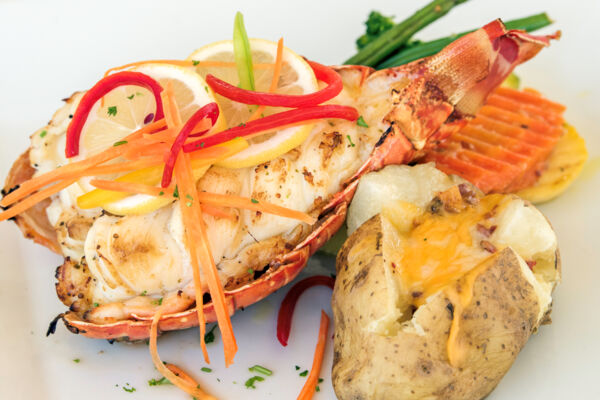
It's no surprise that seafood is the cuisine that's done best here—the archipelago is surrounded by a pristine ocean that supports a variety of marine life and great fishing. Turks and Caicos seafood restaurants offer a range of local and international styles of fish, conch, and lobster dishes, which vary by establishment.
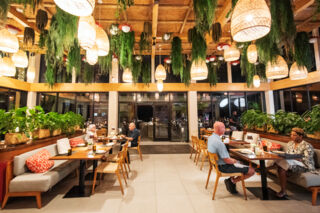
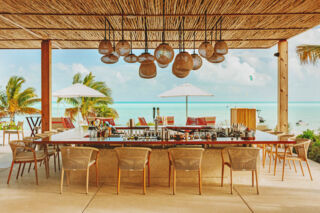
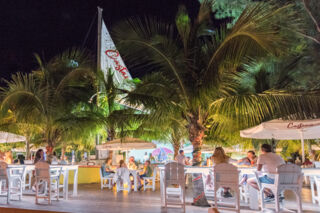
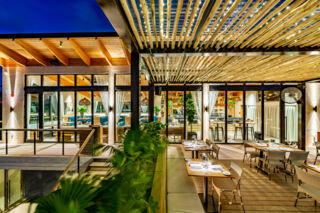
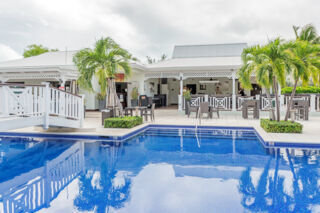
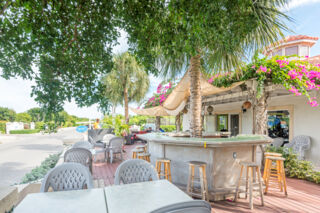
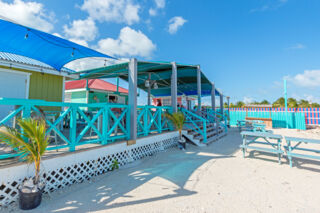
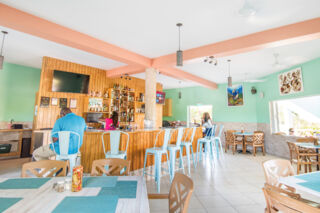
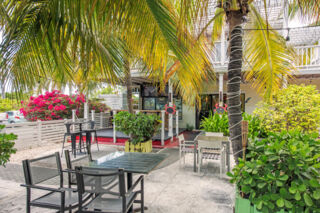
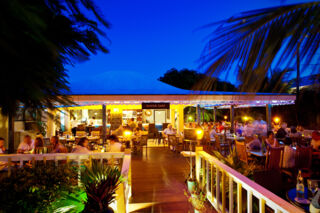
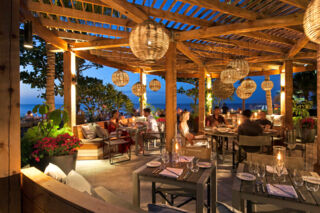
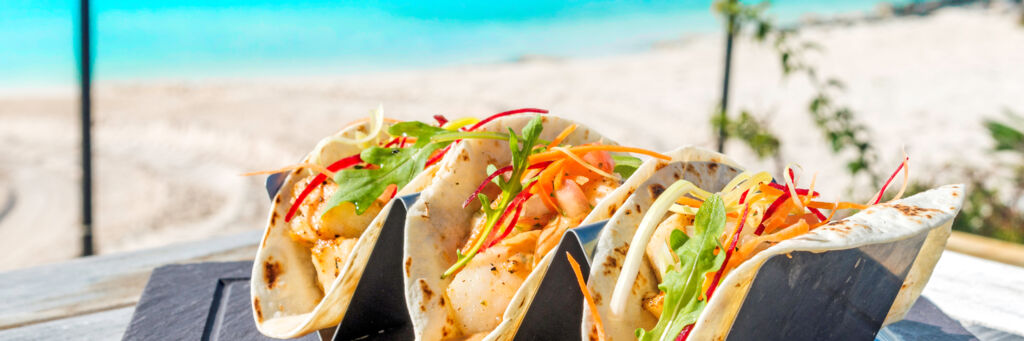
Of the country's islands, Providenciales has by far the greatest selection of restaurants to choose from. You'll find widely varying ambiances (a number of seafood restaurants have a beachfront location) and interesting and creative cooking styles across the island that make it an excellent culinary destination for seafood.
The Local Seafood
Three types of local seafood are widely available: conch, fish, and lobster.
Queen conch is arguably the quintessential seafood of the Turks and Caicos. The islands are one of a rather small group of places in the world where this marine mollusk is easily found on menus. Conch is often prepared in a salad, fried as conch fritters, or served as cracked conch. Conch can also be a foundation for soup.
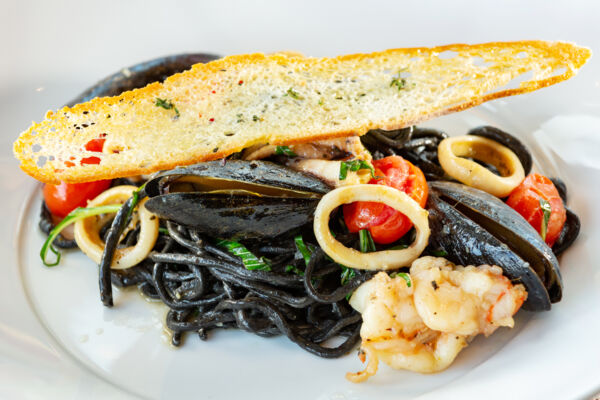
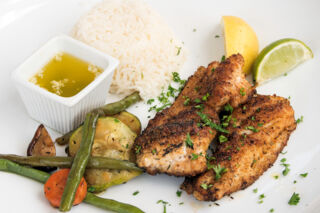
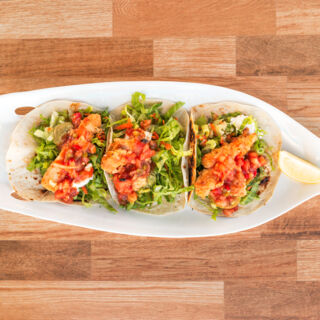
Fresh fish is a staple meal in the archipelago. Common catches include several types of snapper, Nassau grouper and other types of grouper or hind fish, tuna, mahi-mahi, wahoo, and mackerel. Traditionally, the offshore and pelagic fish weren’t pursued much to eat. However, they are more common in local cuisine today (and a possible catch on sport fishing charters). Of the local fish, Nassau grouper is one of the most desirable.
The Caribbean spiny lobster (sometimes called crayfish or crawfish here) is a general favorite with locals and visitors. Lobster season is open from August to April. From May through July, you won’t be able to order lobster in restaurants.
Beyond conch, fish, and lobster, there isn’t much else commonly harvested from the surrounding waters for local consumption. Occasionally, turtle, shark, and small mollusks such as the West Indian top shell are eaten, but such practices have become uncommon.
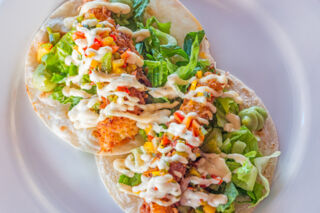
Dishes from Seafood Restaurants
Imported Seafood
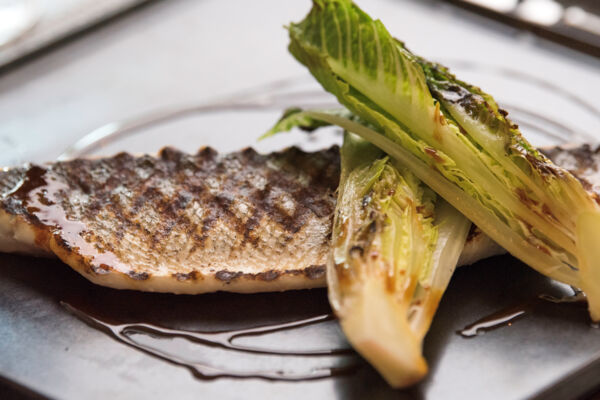
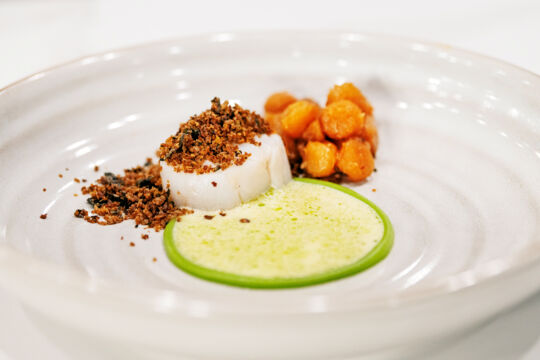
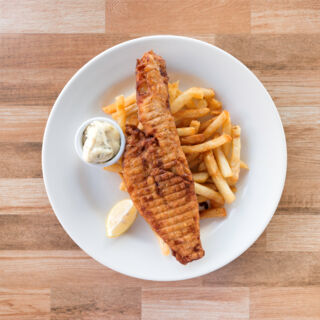
At many casual restaurants that attract tourists, imported fish is actually just as common as local fish. The imported seafood is either an inexpensive alternative to local seafood or is a high-end option (such as sea bass, sole, salmon, and scallops).
Imported fish is a bit of a contentious issue in the islands. In some cases, there’s no confusion—products such as salmon, sea bass, oysters, clams, and shrimp simply can’t be harvested anywhere near the Turks and Caicos. However, unscrupulous establishments sometimes attempt to pass off imported fish as local. The most common scam is marketing tilapia as grouper.
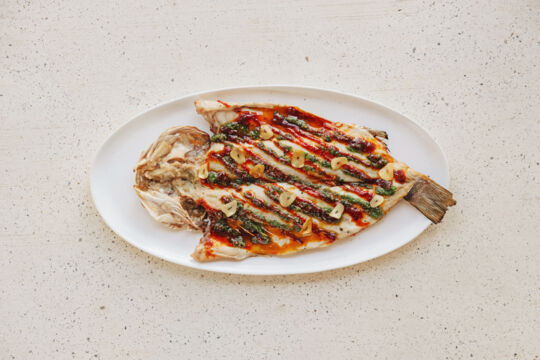
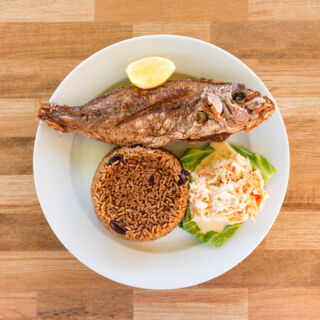
Once you’ve had real Turks and Caicos grouper, it’s typically easy to tell the difference between local grouper and tilapia. Tilapia is often a very consistent fillet with a mild flavor and white, flaky meat, whereas local grouper usually isn’t as consistent in shape, has a much clearer and fresher taste, often has a discernible cut that clearly shows it came from a mid-sized fish, and in many cases is cooked with the skin still on. Most snapper is cooked whole, so there’s no mistaking that local fish.
Many of the gourmet restaurants on Providenciales and at the Grace Bay resorts feature a menu of both local and imported seafood. Seafood shipped to the islands is usually brought in refrigerated directly from the United States.
Seafood in Turks and Caicos Cuisine
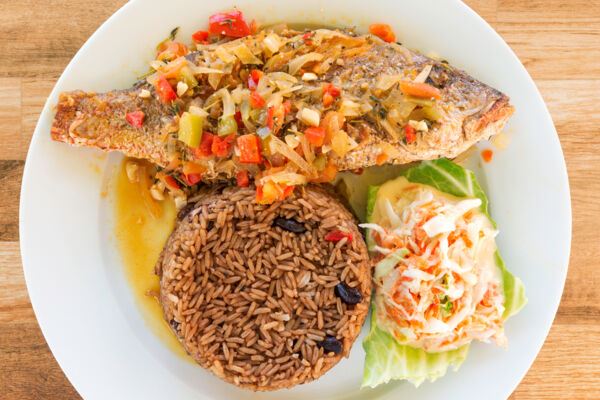
What is a traditional Turks and Caicos seafood dish? It’s actually a difficult question to answer. The day-to-day fare here has historically been directly impacted by the islands' contact with other nations. As imports varied over time, so did the food.
Available imports defined the cuisine. Before reliable trade, seafood was often served with grits made from locally raised maize, okra, or beans. Later on, rice was imported and became a staple. Eventually, cooking oils, sugar, and produce were obtainable. Tastes and cooking styles in the islands were influenced by nearby Caribbean countries as time went on, including the Bahamas, Haiti, Jamaica, and the Dominican Republic.
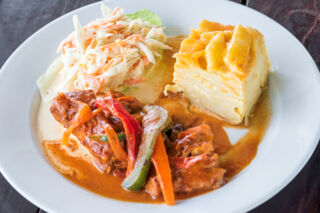
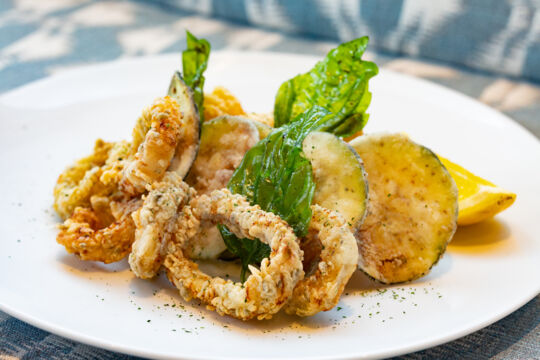
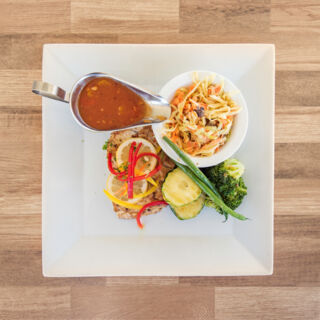
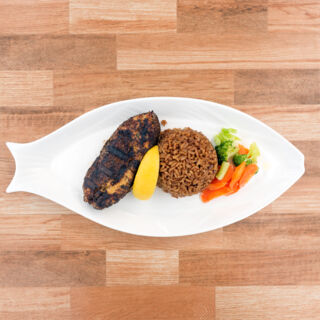
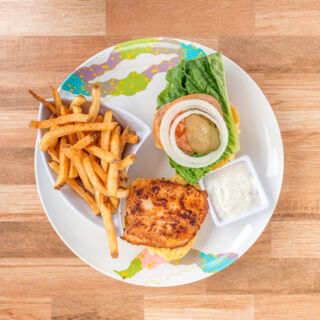
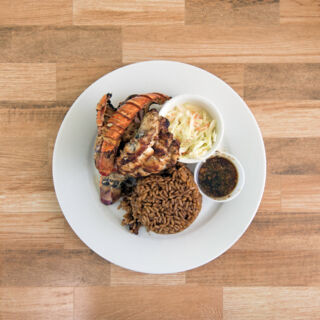
Today, dishes considered to be authentic local food include conch, fish, and lobster stews, soups, souse, conch or lobster salad, and fish or lobster that’s grilled, blackened, steamed, poached, or fried. Popular sides are grits, peas n’ rice, coleslaw, fried plantain, or baked mac n’ cheese.
World-Class Seafood Dining
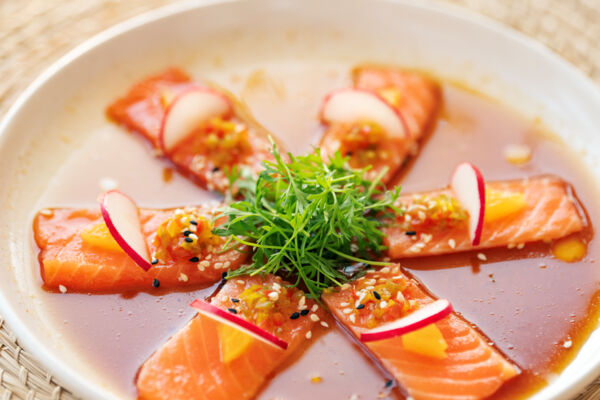
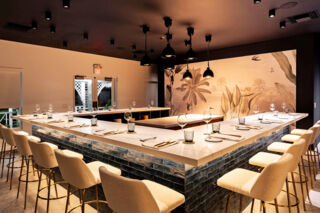
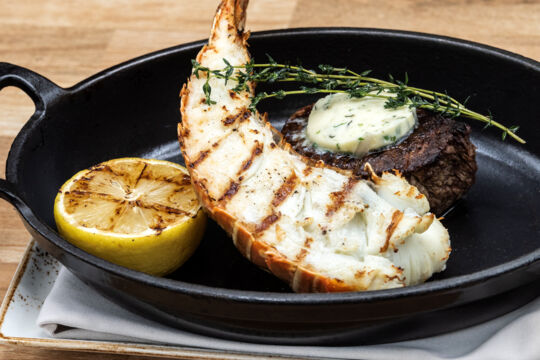
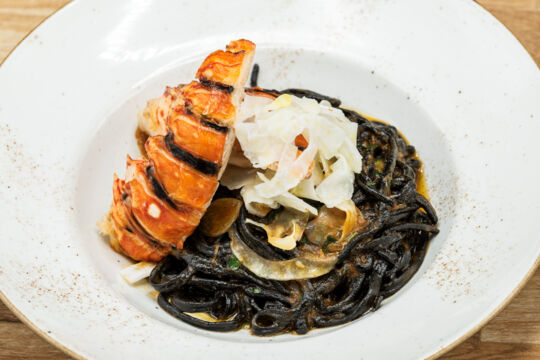
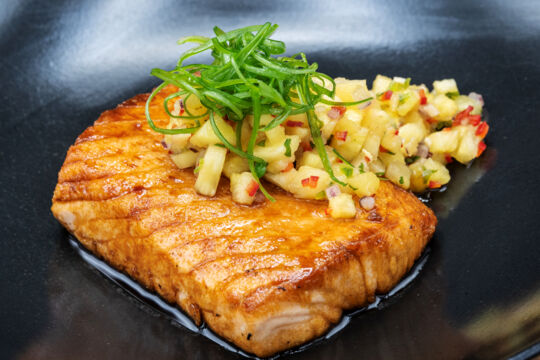
The fine dining establishments offer a delectable array of seafood dishes, which incorporate local and/or imported products. Turks and Caicos seafood restaurants often have their own specialties, interpretations, and fusions. Coco Bistro has its famous rare seared tuna, Seven and Caicos Café offers excellent grilled lobster tail, and Mango Reef and Coyaba are well-known for their grouper.
Typically, it's best to make reservations if you plan to visit one of the fine dining seafood restaurants. Coco Bistro, for example, can book tables weeks in advance.
Seafood Restaurants